Prenez garde au feu !
Writing · Direction — Simon P.R. Bewick
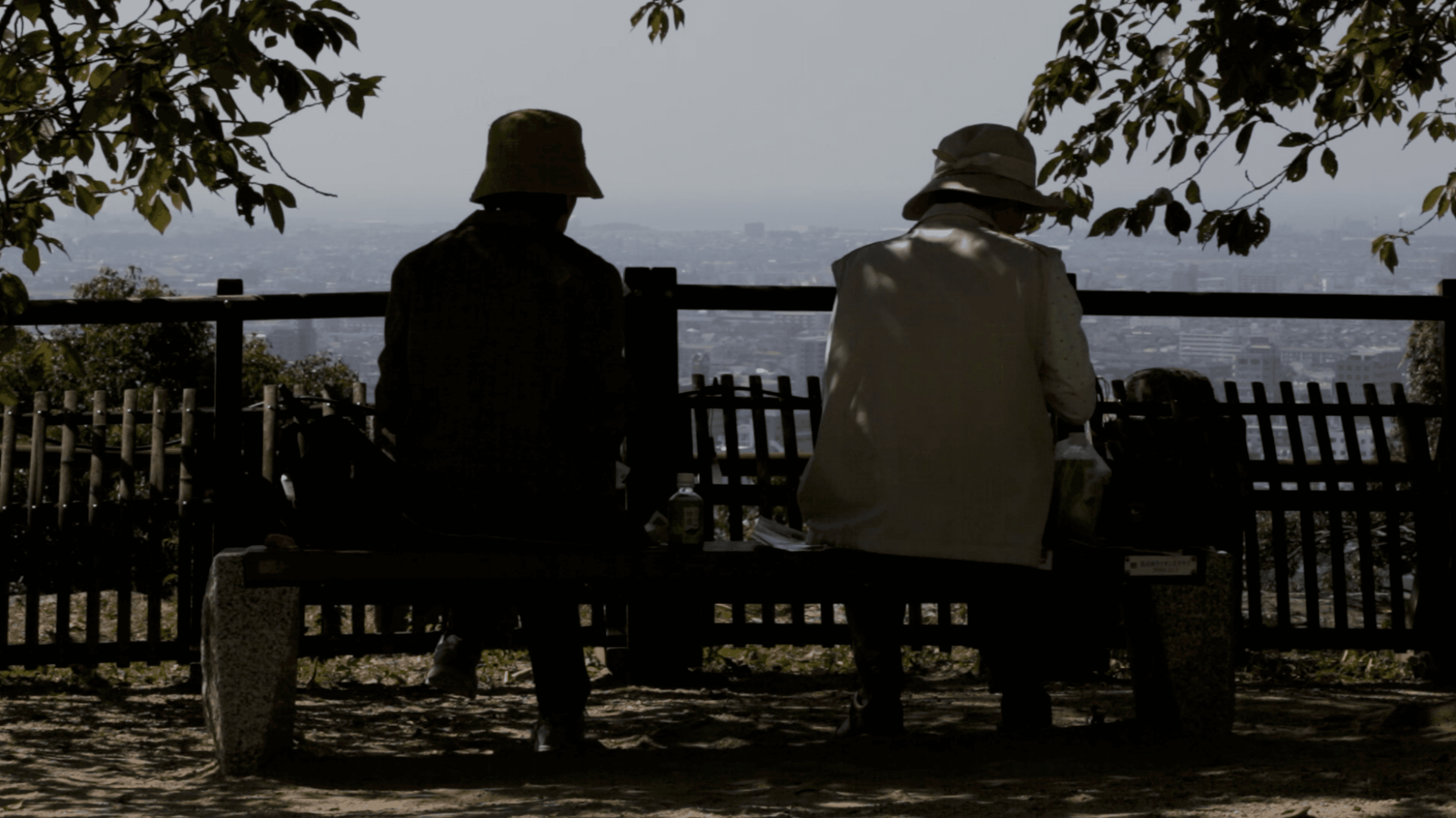
Does putting out a fire prevent the catastrophe? In Kyoto, Etsuko, a street theatre actress turned volunteer firefighter, walks the night patrol every winter to ward off "the Catastrophe".
Etsuko is 76. A street theatre actress, she is also a volunteer firefighter in Kyoto.
Every year, from November to January, she takes part in ritual night patrols through the Rokujizo neighbourhood, warning neighbours and friends of the risk of fire.
In this winter season, the threat of fire burns in every stove at the heart of the soft, restful darkness of Japanese wooden houses. With her fellow volunteer firefighters, Etsuko lets a few beams of light into that gentle dusk, hoping, each winter night, to ward off "the Catastrophe" she calls "Saigai" — an overwhelming event that threatens to destroy the Community at any moment.
Everywhere, all the time, one must "beware of fire". It is chanted indistinctly, in houses, in the streets; from every side, the same call goes up: "the Catastrophe" — technological or human, natural or supernatural — is always threatening.
Even folk legend tells of it, taken up by Rokujizo’s volunteer firefighters, who divide among themselves the roles of a play adapted from it. Etsuko becomes young Yaoya Oshichi, who sets fire to a temple in the mad hope of winning back her beloved. A tragic tale: she ends up condemned to the stake. This legendary story touches me deeply — Yaoya could be me, but for that I would have to face the fire that threatens to consume me, the catastrophes I have overcome, or still fear today.
Is waiting for catastrophe, then, what invites it to happen? Isn’t the volunteer firefighters’ call to vigilance itself a fire-conjuring invocation? Why am I willing to travel 9,600 km to ask these questions?
Between their night patrols through Kyoto and their dusk theatrical performances, Etsuko and her brigade trace, in their own way, the contours of the Japanese "Saigai" — a dark, terrifying story woven into the archipelago’s collective history, from Hiroshima to Fukushima. A universal catastrophe that can resonate in each of us: how do you recover from destruction? How do you move past the darkness of catastrophe? How do you face your own catastrophes?
After the ruins, how do you go on creating?
Watch
Production
- Armadillo Entertainment
- Tajine Studio
- CNC, Région Normandie, Région Bourgogne-Franche-Comté, CNC Romania
Awards & recognition
- CNC — Scriptwriting grant